My First Roll with a Voigtländer Bessa I
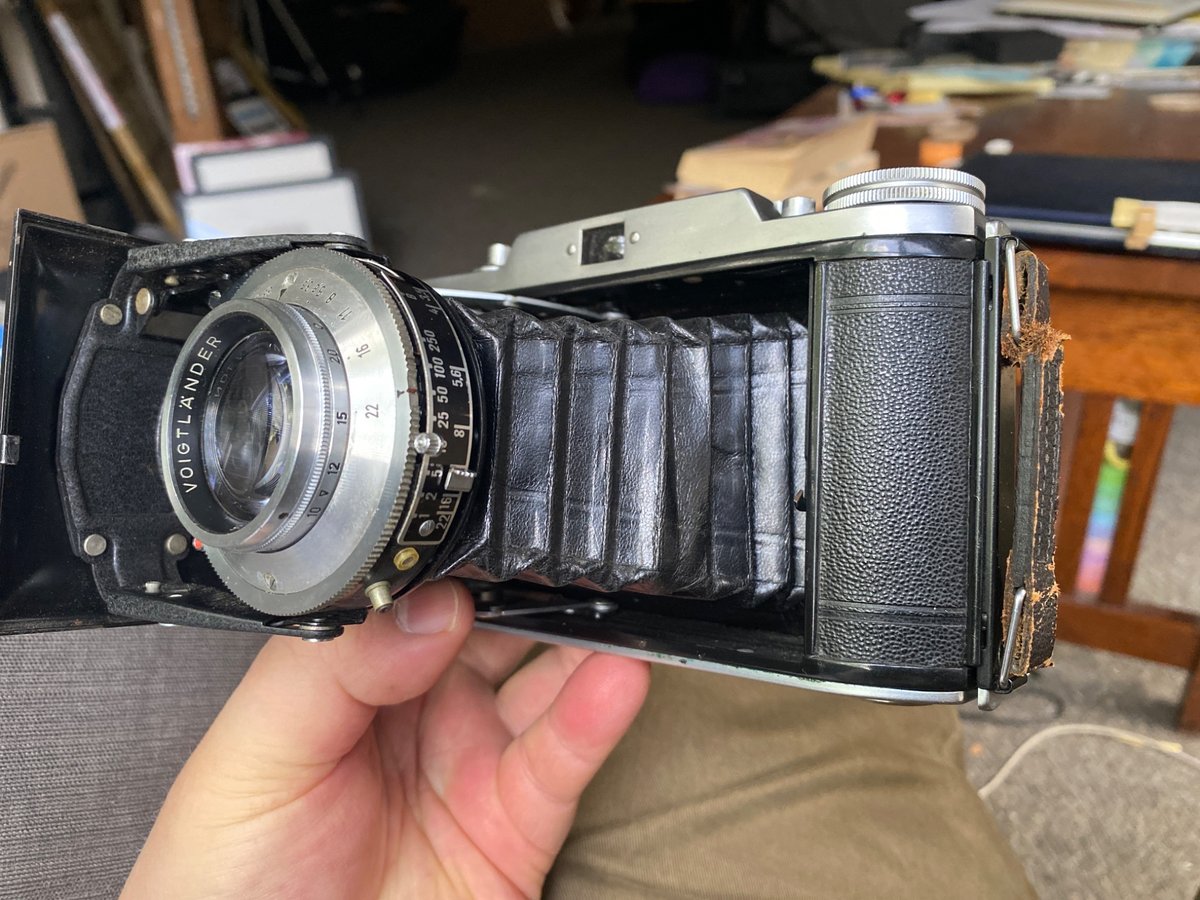
There's a particular kind of madness that leads a person to load film into a camera built almost 20 years before they were born, point it at the world, and simply hope. But that is exactly how I would describe my decision to buy a Voigtländer Bessa I 6x9 camera to take on some upcoming travels. It's a 6x9 folder from the early 1950s. If I were to guess, I'd say that my specific camera was manufactured around 1952. Voigtländer is one of the oldest names in photography. Founded in Vienna in 1756, generations before photography itself existed, and the firm that, in 1840, manufactured the Petzval Portrait lens: the first photographic lens designed by mathematical calculation, and fast enough to finally make portraiture practical. Voigtländer soon settled into a long life making optics and cameras in the German city of Braunschweig. By the time my camera was built, though, the company was working its way out of a hard stretch. It came under British control at the end of the war, and for the first few years much of what it produced went to the Allies as reparations. Only after the 1949 currency reform did it really get back to building cameras for ordinary buyers. The Bessa I is very much a product of that recovery, an affordable, solidly made folder aimed at a post-war market just learning to buy cameras again.
Voigtländer turned out the Bessa I from 1951 to 1956, somewhere around 80,000 of them, in a spread of lens and shutter combinations to suit every budget. Mine sits near the top of that range: a coated 105mm f/3.5 Color-Skopar, a four-element, Tessar-type lens that comfortably out-resolves the cheaper triplets on the bargain bodies paired with a Prontor leaf shutter.
It is a slab of a thing that collapses flat enough to disappear into a coat pocket, then springs open on a scissor strut into a proper medium-format camera. Eight enormous negatives per roll. No light meter, no rangefinder, no autofocus, no batteries, no reassurance of any kind.
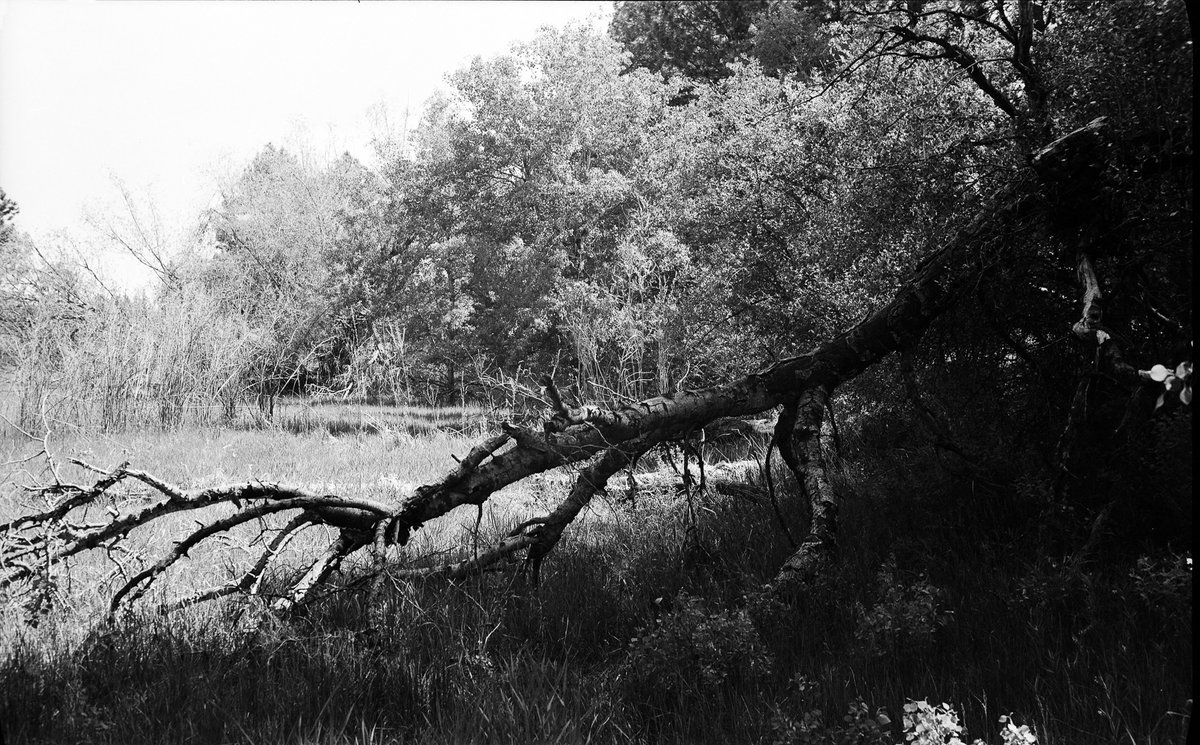
I shot a test roll through mine. I developed the negatives and scanned them yesterday. I'll show you the good and the bad (though only 7 frames, as the first exposure was a throw-away), but this isn't really a post about them as photographs. It's a post about whether the camera could make a photograph at all, and what it's like to find out.
Why a seventy-year-old folder?
This started as a packing problem. I have a Chamonix 4x5 field camera that I love, but "love" and "want to carry through weeks of overseas travel” are not the same feeling. I wasn't trying to travel light, exactly — there's an enormous amount of room between hauling large-format gear and traveling light, and I was looking to land somewhere in that middle. What I wanted was real film area in something I could actually walk around with all day.
So I went medium format and, in the end, I went plural: a Voigtländer Bessa I in 6x9 alongside a Voigtländer Perkeo I in 6x6. Two folders, two formats; together they weigh significantly less than even the most compact 4x5, but they still ask me to bring the kind of effort I've come to appreciate in shooting film.
The pitch of the Bessa specifically is the negative. A 6x9 frame is roughly six times the area of a 35mm one, which means even a soft old lens resolves more detail than it has any right to, and the tonality has a smoothness that's hard to fake. You get eight frames to a roll of 120, which sounds stingy until you realize it slows you down in exactly the way that makes you think before pressing the shutter. And the whole apparatus folds into something you can actually carry. A camera this capable has no business being this small.
The catch is that "capable" and "still working" are very different claims when the object in question is over seventy years old.
First challenge: finding one that isn't broken
Bessa Is are plentiful and, for medium format, genuinely affordable, which is possibly a trap. They're affordable because most of them are quietly broken in ways a seller's photos will never reveal, and a clean, working example with the good lens costs more than the bargain-bin bodies that flood the listings. Shopping for one is less about finding a nice example and more about ruling out the four or five ways these cameras die.
Bellows. This is the classic folder ailment. The leather-and-fabric bellows that connect the lens standard to the body crack at the folds and corners after decades of being opened and closed, and a single pinhole will fog your film. The test is simple and worth doing on any folder you're considering: open the camera in a dark room, put a small bright light (a phone flashlight works) inside the film chamber, and look at the bellows from the outside. Any star of light leaking through is a problem. Small ones can sometimes be sealed; a bellows shot through with them is a parts camera.
The lens. I looked for haze, fungus, and separation. Light haze is survivable and mostly costs you a little contrast. Fungus is a judgment call; a faint trace at the edge won't ruin pictures, but an established bloom etches the coating and spreads. Separation (where the cement between glued elements breaks down into a shimmering, oily-looking patch) is usually a dealbreaker.
Shutter and aperture. I watched for oil on the shutter blades or aperture leaves, which is the visible symptom of a deeper problem and a strong predictor of sticky, inaccurate timing. More on that below, because it became the whole story.
Geometry. On a 6x9 frame, focus errors are unforgiving, so the lens standard has to pop out and lock square to the film plane. A standard that sits even slightly tilted will throw off sharpness across the frame in a way no amount of stopping down fully rescues.
The one I bought has the 105mm Color-Skopar in a Prontor shutter. I found it on eBay for around $200, which strikes me as a fair price for a working folder with the better glass. Neither a steal nor a gouge. The Color-Skopar is the lens you want on a Bessa I, a coated, four-element Tessar-type design that sits a clear notch above the three-element Voigtar and Vaskar triplets the cheaper bodies carry. It's the difference between a folder that takes acceptable snapshots and one that genuinely earns those big negatives. My acceptance criteria as a first-timer were otherwise modest: tight bellows, glass I could see through clearly, and a shutter that at least fired at every speed. Accuracy I was willing to find out about the hard way.
Second challenge: focusing by guessing
If you've only ever used through-the-lens/autofocus or a rangefinder, here's the part that sounds insane. The Bessa I is a scale-focus camera. There's no optical aid of any kind. There is a viewfinder that has no focus-related value, and is simply used to assist in framing the composition. To Focus, you look at your subject, estimate how far away it is in feet or meters, turn the lens until that number lines up with the index mark, and trust yourself. The camera offers no confirmation. You don't find out whether you got it right until the negatives are developed.
People assume that without a fast lens this doesn't matter much, that everything's in focus anyway. On 6x9 it absolutely matters. The Color-Skopar is a 105mm lens opening to f/3.5, and at the wide end the depth of field is genuinely shallow. Misjudge a portrait distance by a couple of feet and the eyes go unacceptably soft.
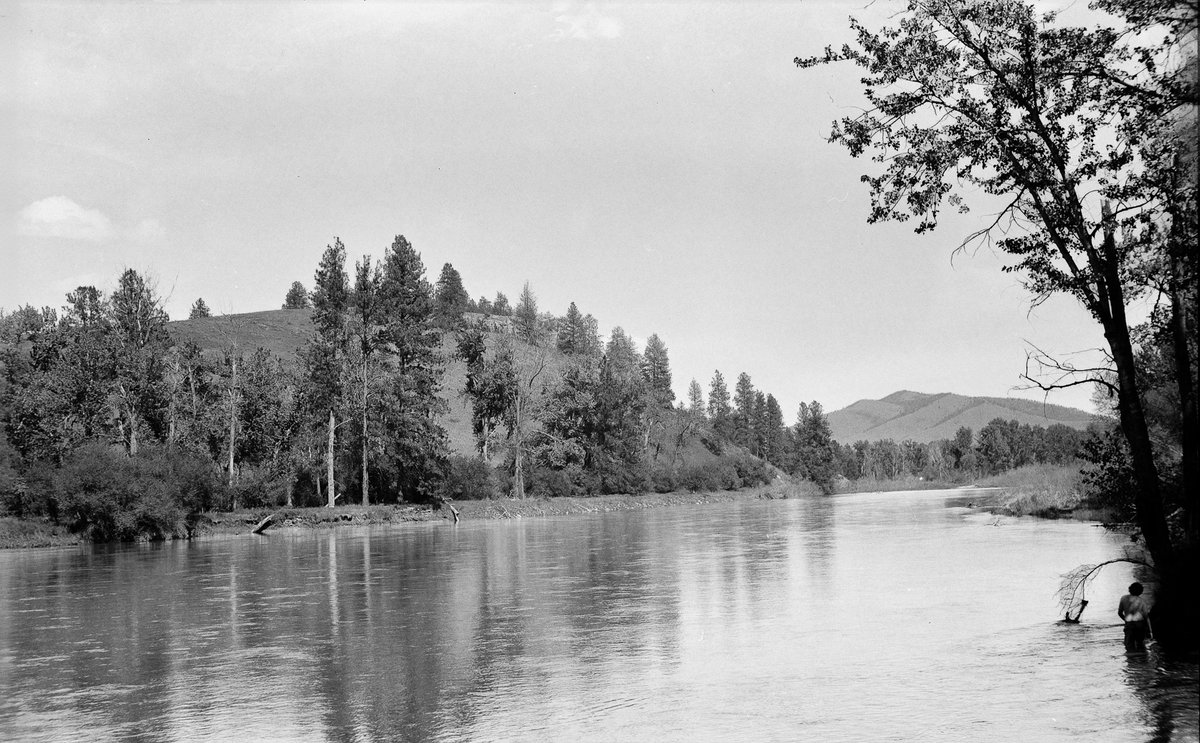
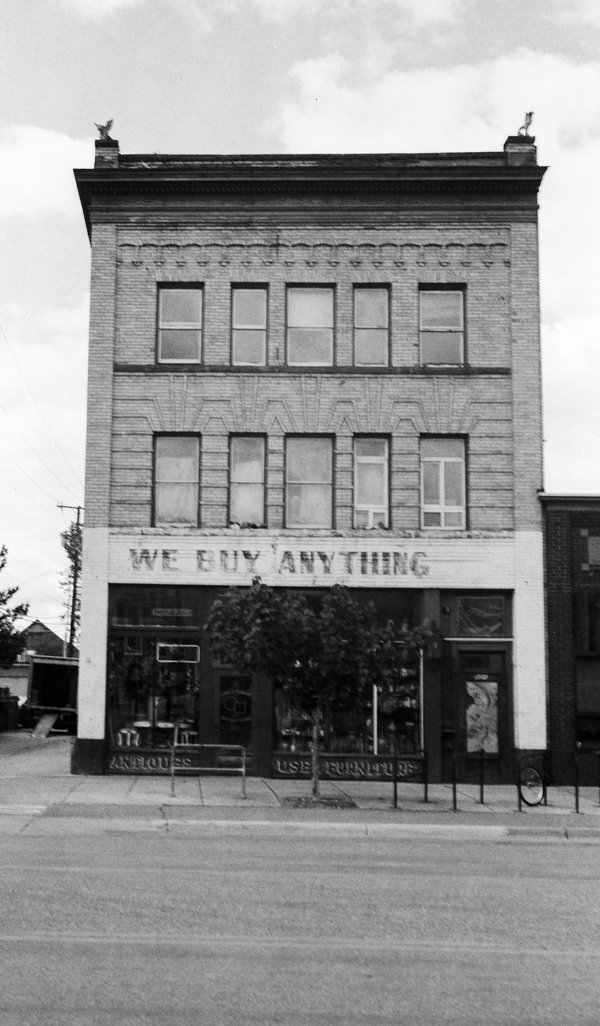
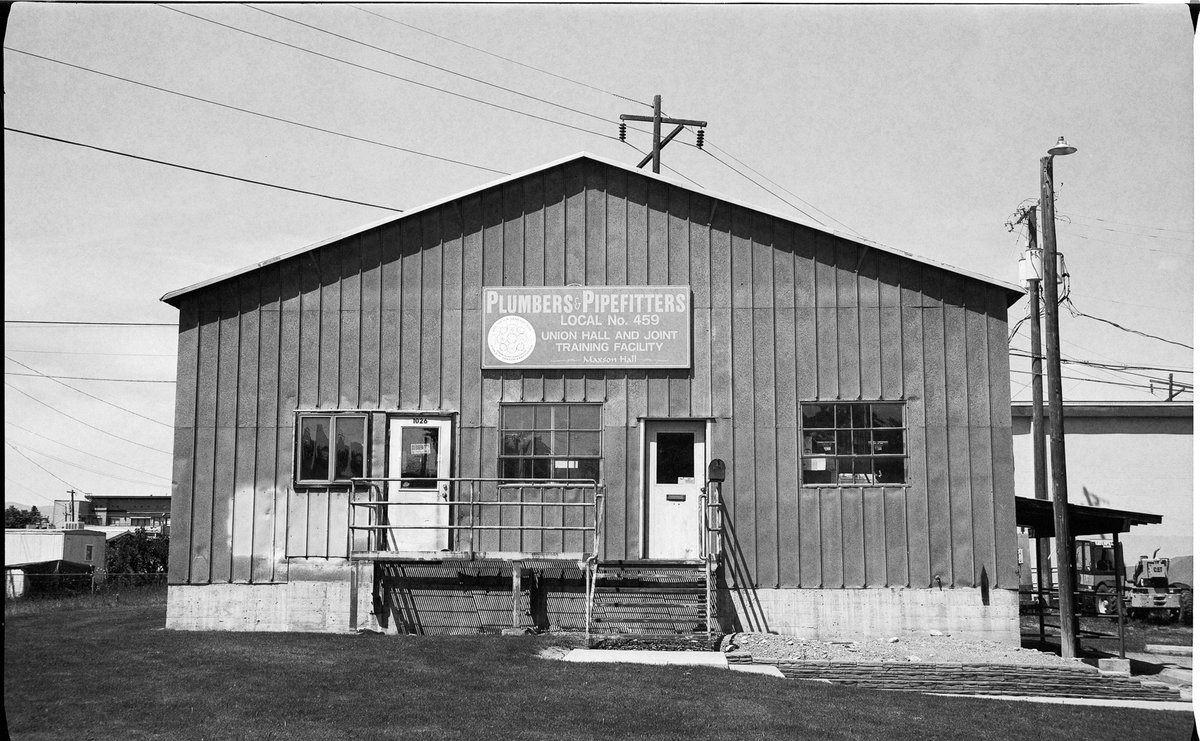
My strategy was to stop relying on precision and start relying on probability. I shot at f/11 to f/16 wherever the light allowed, which deepens the zone of acceptable focus into a band rather than a plane, and then I referenced a depth-of-field scale to determine exactly where that band fell. For anything at a distance I set the lens near its hyperfocal distance so that everything from a few meters to infinity landed inside the zone, and stopped worrying about exact numbers. For the first shot, of the “We Buy Anything” thrift store, I simply guessed the distance. For the second shot, the Plumbers and Pipefitters Union Hall, I paced the distance out, literally walking it off in stride-lengths rather than eyeballing it. Guessing is more accurate when you stop pretending it's anything other than guessing.
After those two shots, I hedged. I'd ordered an Ideal accessory rangefinder: a little hand-held optical unit, to take some of the guesswork out. Mine doesn’t have a cold-shoe mount so there is some added margin of error as I move from rangefinder to camera. So, it doesn't couple to the lens the way a built-in rangefinder would; you frame the subject in it, twist until the split image lines up, read the distance off its dial, and then dial that same number onto the lens by hand. It measures distance; it doesn't focus the camera for you. So it minimizes the error without eliminating it, and you can still misread it, or fumble the transfer to the lens, but turning a wild estimate into an actual measurement feels like a real improvement.
Third challenge: trusting an old mechanical shutter
The lens you can inspect. The shutter is a black box, a clockwork mechanism of springs and gears that has been sitting in a drawer for decades, and old grease doesn't get faster with age.
The slow speeds are the usual liars. A gummed-up escapement (the little governor that lets a wound spring release its energy slowly and at a measured rate, instead of all at once) runs long, so a marked half-second can drift to something considerably slower, and the slow range is where that error is most visible. The Prontor's top speed is a modest 1/300th of a second anyway, and old shutters often don't quite reach their fastest marked setting. Since 1/300 isn't all that fast by modern standards to begin with, a little shortfall there costs me almost nothing. The middle speeds, somewhere around 1/50 to 1/100, are the most likely to be honest, because they lean least on the parts that gum up.
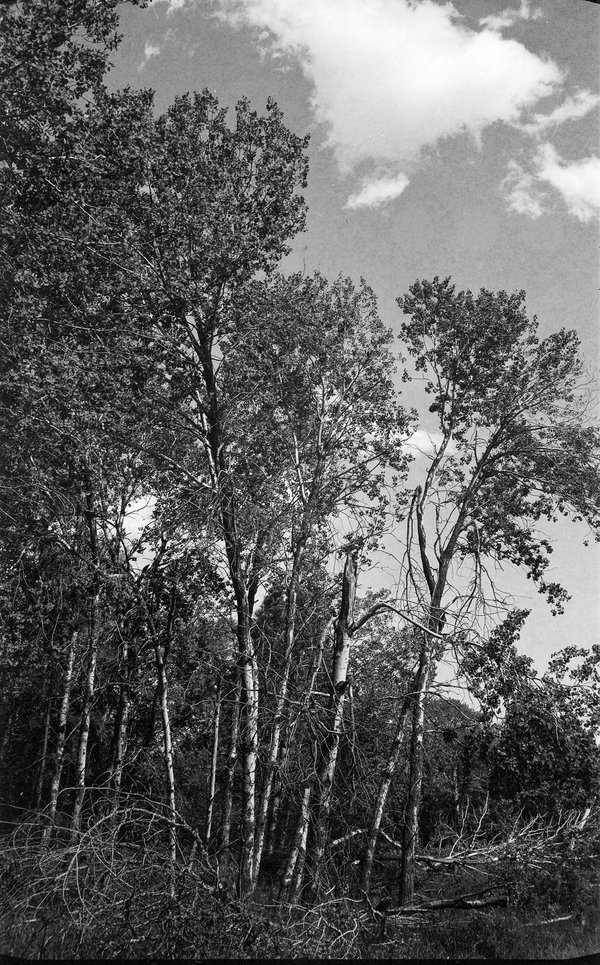
So the plan was to live in the middle. In theory, I’d try to favor speeds around 1/50 to 1/100 and let aperture carry the rest, leaning on the wide exposure latitude of negative film to absorb whatever the old shutter got wrong. A shutter lying by a third of a stop simply doesn't register on a negative the way it would on slide film or a digital sensor, and that latitude is most of the reason shooting a camera you can't fully trust is reasonable at all.
The plan holds in good light. It comes apart in dim light, for a reason that has nothing to do with whether the shutter is honest: I prefer slower films. Pair a slow emulsion with a shaded street or overcast scene and the exposure wants 1/15 or 1/30 of a second. Now the question isn't whether the shutter is accurate, it's whether I can hold the camera still long enough for an accurate shutter to do me any good. File that away; it's where the roll ends up pointing.
Developing the roll: the verdict
I developed the film in my darkroom using one of my standard developers, and I went down the list of suspects.
- Light leaks: None that I could find inspecting with a flashlight. On inspecting the film, I see no fogging, no streaks, no flare creeping in from the edges. The single most common folder ailment, the one I spent the most effort screening for, and I can rest assured that bellows leaks are not going to plague me as I shoot on my travels. The bellows are sound.
- Focus: The first frame settles it: guessed distance is not ideal, but it produces an effect that can be interesting. Stride measurement is actually a reasonable way to improve accuracy, but the little rangefinder is going to be a valued part of my kit.
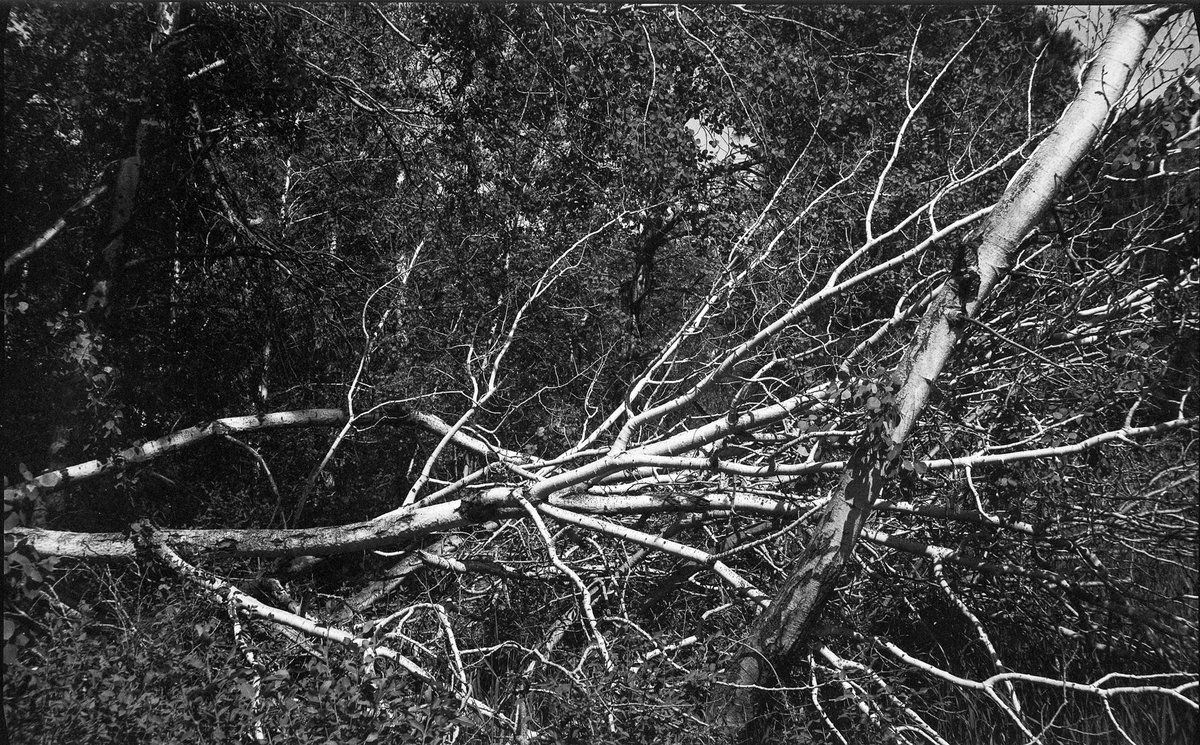
- Exposure: As expected, right across the roll. The shutter, being the component I trusted least walking in, seems to be the one I needn't have worried about. Frames are consistent and properly exposed, with no sign of the slow-speed drift or top-end shortfall I'd braced for. The irony is that the shutter being accurate is exactly what exposes the real problem: in low light with the slow film I prefer, an honest meter reading is 1/15 or 1/30, and a perfectly timed 1/15 handheld is still a perfectly timed way to record camera shake. The blur in those frames isn't the shutter's fault. It's mine. And, I should also state here that the first few shots on this roll were exposed with the Sunny 16 method, not an actual meter. The second half of the roll, I used a Sekonic L-398-M, an incident meter. I hold it at the subject with its white dome pointed back toward the camera and read the light actually falling on the scene rather than the light bouncing off it. It's the right companion for a camera like this: it's fully analog and runs on a selenium photocell with no battery to die on me, so the meter is exactly as period-correct and self-sufficient as the Bessa it's feeding.
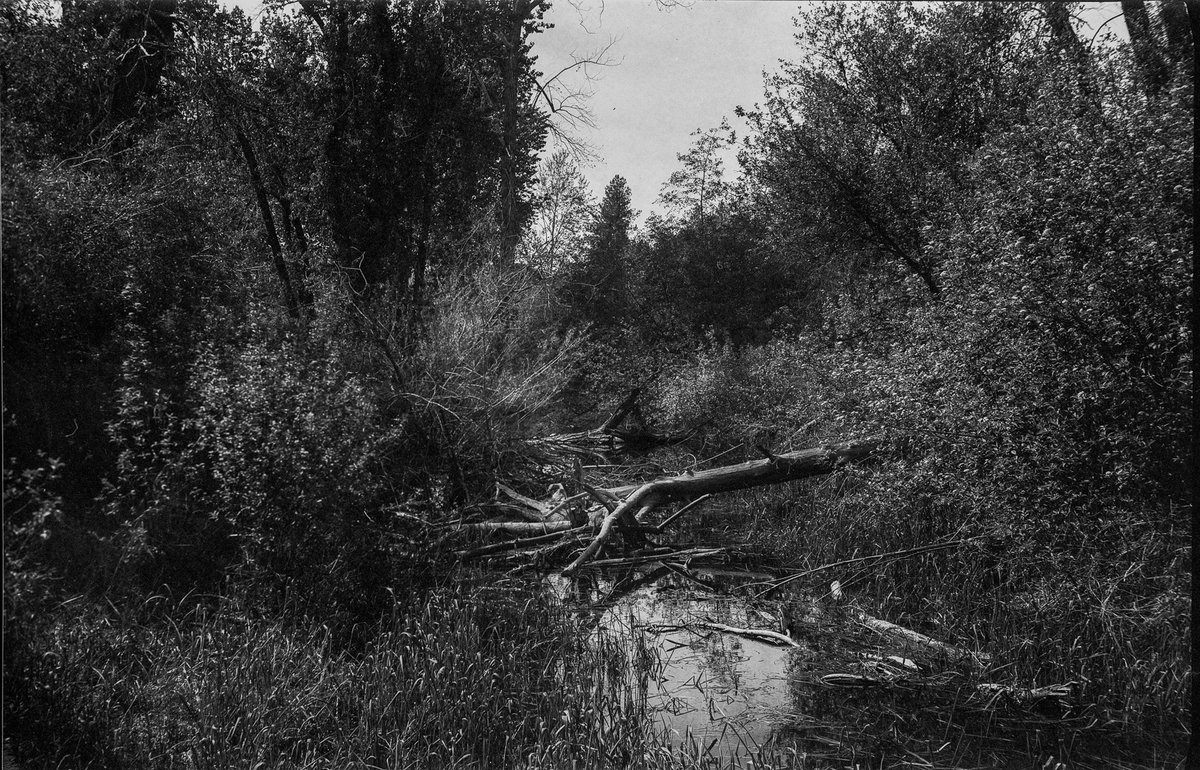
This Bessa is a Keeper
The verdict is easy: The Bessa I is definitely coming on the trip. The Ideal Rangefinder and my Sekonic L-398 will be essential aids, and I have ordered a 3-axis cold-shoe spirit level to help level the camera. The Bessa does have two threaded tripod mount points, though neither sits where you'd want it. The one I'm using, the 1/4" socket on the left, tucked under the take-up spool, is offset well to one side, and with the bed dropped and the lens cantilevered out front, the camera's weight wants to pull forward and to the side rather than settle squarely over the mount. Balanced, it is not. But balance isn't really the bar for a body this light; secure is, and the socket grips my SmallRig Arca plate firmly enough to lock the camera onto a travel tripod without complaint. The 3-axis level handles the rest, letting me true up a camera that has no particular interest in sitting level on its own.
The Bessa earned it’s place in my bag. The shutter keeps good time, the bellows hold, and the Color-Skopar is every bit the lens its reputation promises. What the test roll actually taught me is that the camera is exactly as reliable as my hands. There are two ways to blur a frame on a thing like this: miss the focus, or move during the exposure, and the test roll caught me doing both. The Ideal rangefinder certainly improved the focus issues by giving me an optical tool to gage distance. But pacing out the distance in a scene is also an effective method, which I will continue to employ when the situation allows. The slow shutter speed with unstable hands issue is on me, and no accessory short of a tripod cures it: my taste for slow film means that when the light drops, so does the shutter speed, down into territory where a heartbeat shows. For the trip that means tucking a faster stock in a pocket for interiors and dusk, bracing against whatever's handy, and accepting that some low-light frames simply won't happen handheld.
The other medium format camera I aquired, the Voigtlander Perkeo I, deserves its own post. It's a 6x6 that differs from the Bessa in a few ways that genuinely matter, and folding the two together would shortchange both. So I'll write it up separately.
But the short version is that the test rolls did their job. Two old folders, two clean bills of health, and a kit that finally lands in that sweet spot between large-format ambition and actually enjoying the walk. I'm looking forward to traveling with them, friction and all. I'll find out the rest somewhere on the other side of an ocean, one frame at a time.